What are they and how are they done?
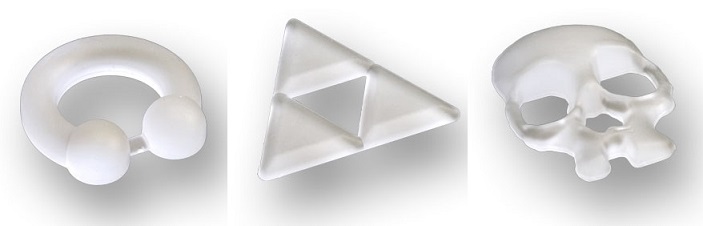
Subdermal implants (subdermal literally means “under skin”) are silicone shapes/designs placed under the top 2 layers of skin to change the contours of the body.
An incision is made near to (an inch or so away from) the site the implant is to sit at, and the layers of skin are separated to create a pocket, which the silicone piece is inserted into, the incision is then closed with sutures (stitches).
Lots of different shapes and styles are available, and prices depend on which size/style is chosen.
What are they made from? Isn’t Teflon the best material?
Silicone is used because it is softer and more flexible than the previously used Teflon pieces. If they are knocked or bumped, they will bend and flex and not cause as much trauma to the area. The silicone implants most widely used are silicone pieces made by Steve Haworth. These pieces are implant grade and carry the lowest possible risk of rejection. The implants are NOT the same as used in breast enlargement, they are solid silicone and are not filled with any liquids.
Can they reject?
While rejection (your body pushing the implant out) is extremely rare, it is something that could happen. The causes are usually from trauma to the area (mentioned earlier – constant knocks and bumps or pressure and injury to the area). Should an implant start to reject, removing it as soon as is possible would minimise scarring and cause the least amount of pain and unnecessary danger.
Where on the body can you get them?
The implants can be placed more-or-less anywhere on the body. Some placements are more popular than others (most popular: back of hands, side of neck, chest) and it is not advised that they are placed anywhere with a high amount of movement or pressure from clothes (joints, feet, under waistbands of clothes etc).
How long does it take to do? And what are they like to heal?
The procedure time will vary with the size of the implant, but expect an hour for smaller pieces, and up to 3 hours for large ones.
For the first week, you have to avoid getting the area wet, which can be awkward, but getting the sutures (stitches) wet can cause them to open up (not good!). You can cover the area with a dressing to minimise trauma/splashes of water on there. After 10 days, the sutures are removed (you will return to your artist for this). Once the stitches are out, the incision will start to heal nicely. As with any wound, a scar will be left, but over time, it will fade and turn white. Avoid picking at any scabbing/dry skin to help it heal as best it can. The swelling from the procedure can be present for a couple of weeks, and even then, your body will have to heal (internally) around the implant to make it stand out and the shape of it be ’obvious’. If the implant has a ‘hollow’ middle, taping a cotton wool ball in there can help it gain its shape, and it is recommended that in any situation where the piece is placed centrally or has a defined ‘top’ and ‘bottom’ that it is taped in place for the first 2 weeks or so to prevent it tilting or moving.
While healing the implants is quite laborious on ‘what to do/what not to do’ they will heal relatively quickly – initial healing (until the pain/swelling stops) is about a month, and after about 3 months, the area should be settled and happy. However, it can take up to a year before the implant is showing its shape fully.
What if I decide I don’t want it anymore? Are they permanent?
The implants can be removed, in a similar way to the way they are done. The area would need suturing once more, and these would, again, have to be removed after 10 days.
Any restrictions on who can get them? And how would I go about getting one?
Subdermals are available to people over the age of 18 (Photo ID may be required) And body mod artists will insist on a face-to-face consultation to discuss the design and placement of the implant. A non-refundable deposit is usually required for your artist to order in the silicone piece when the appointment is made. Consultations are usually no-obligation and free of charge.

At time of writing, this procedure is no longer available from any artist in the UK. (Google Mac McCarthy to see the proceedings which led to this, a man fully competent and capable, turning out excellent work, was prosecuted for offering body modification procedures. Meaning a precedent was set, and this is now not permitted in the UK). I forward anyone asking me about this kind of thing to Chai at CALM in Sweden – there are other body mod artists worldwide, but please explore portfolios before committing to an artist.