
Something I have wanted to blog about for ages… but I have no way of giving it a short ‘n sweet ramble (on this or any other topic) so was a little reluctant to start, but here we are! All the photos in this blog are my work unless otherwise stated.
WHAT DOES ‘ANATOMY DEPENDENT’ MEAN?
In short – a piercing that not everyone can get due to their body’s shape. Notice I say ‘shape’ and not ‘size’. The size of a body part is rarely a factor, it’s the SHAPE that matters. Navel (bellybutton) is a good example. I see people relatively often who will mention how much they want to get their navel pierced but have been told (often by other piercers) that they are ‘too big’ or ‘too skinny’. Not only is this language untrue, but it is also body-shaming at it’s finest. Body positivity is a whole other blog, but a reminder that loving your body is a huge part of your self-care routine, but there is such a thing as ‘toxic positivity’ whereby people are made to feel bad BECAUSE they can’t accept a body part. I never allow anyone to shame their body in my room, we don’t use words like that about our friends – so we won’t be saying them about ourselves! Wow, 2 paragraphs in and we have our first tangent! Someone once told me that “if you don’t like a body part of yours, pierce it or tattoo it and you will fall in love with it all over again”. No truer words have ever been spoken!
So. ‘Anatomy Dependent’ – meaning that certain body parts cannot safely be pierced (we will come back to ‘safely’ later) due to the individual’s specific anatomy. Technically ALL piercings are anatomy dependent – Voldemort couldn’t get a nostril piercing. We’re not going to discuss things like microdermals or surface piercings in this blog (there are other blogs up if you are interested) but bear in mind that certain placements, though possible, are not advised (hands and feet, inner wrists, the hollow between your collarbones) because they just don’t last. But they are not technically ‘anatomy dependent’.
WHICH PIERCINGS ARE ANATOMY DEPENDENT?
As mentioned above, ALL piercings are anatomy dependent, but I’d say that if less than 90% of people can get a piercing, it’s an anatomy dependent piercing. Most common anatomy dependent piercings are: Navels, industrials, smileys, snugs and most intimate piercings. I’m not going to list all the possibilities of anatomy with the above, as it would take too long. But in short….
NAVELS: must have a clear ‘ridge’ of soft tissue. ‘Outies’ can sometimes be pierced, but it’s not common – and its usually the bottom of the navel that is pierced. Please note that the ‘outie’ part in the centre of your navel should absolutely NEVER be pierced. It could cause an umbilical hernia and is extremely dangerous. Navels without a lip can sometimes have a ‘floating’ navel piercing, where the jewellery is hidden inside the navel, but the top of the jewellery is usually fancied up with flowers, clusters, etc – the ‘standard’ navel bars can’t usually be worn in floating navels (but in SOME cases, a ‘J-curve’ can be worn). I’m also seeing a lot of people who have had ‘tummy tuck’ surgery, but this usually results in a tight ring of scar tissue around the navel, which can’t safely be pierced.
Standard Navel (fresh)

Floating Navel (healed)

Inverse Navel (on an ‘outie’ – fresh)

INDUSTRIALS: by FAR the most commonly refused ‘standard’ piercing service. You need a large, prominent ridge ‘helix fold’ around the top of the ear, and the semi-circle under it (often called the ‘flat’ or ‘scapha’) has to be flat, or very nearly flat. There CAN be placement variations that can make it work, so do be flexible with where you want the piercing – and more often than not, one ear is absolutely possible to do this on, and the other isn’t! While the prominent helix fold is a must for a standard industrial, the scapha area not being completely flat can sometimes be worked around – like placing the piercings higher/lower/at a different angle to avoid any ‘rises’ on the scapha. If a standard/traditional industrial is not possible, there are some options. Custom bending the bar is possible (but obviously means that your jewellery options are limited), using 2 shorter bars and linking them with a chain looks great, or using a ball and socket jointed piece. While this is definitely the most commonly refused piercing, it is also the one with the most options as an alternative.
Lynn Loheide has a great blog on this: https://www.lynnloheide.com/post/industrial-piercings-101-a-look-at-these-popular-ear-piercings
Standard Industrial (fresh)

Industrial with Chain (healed)
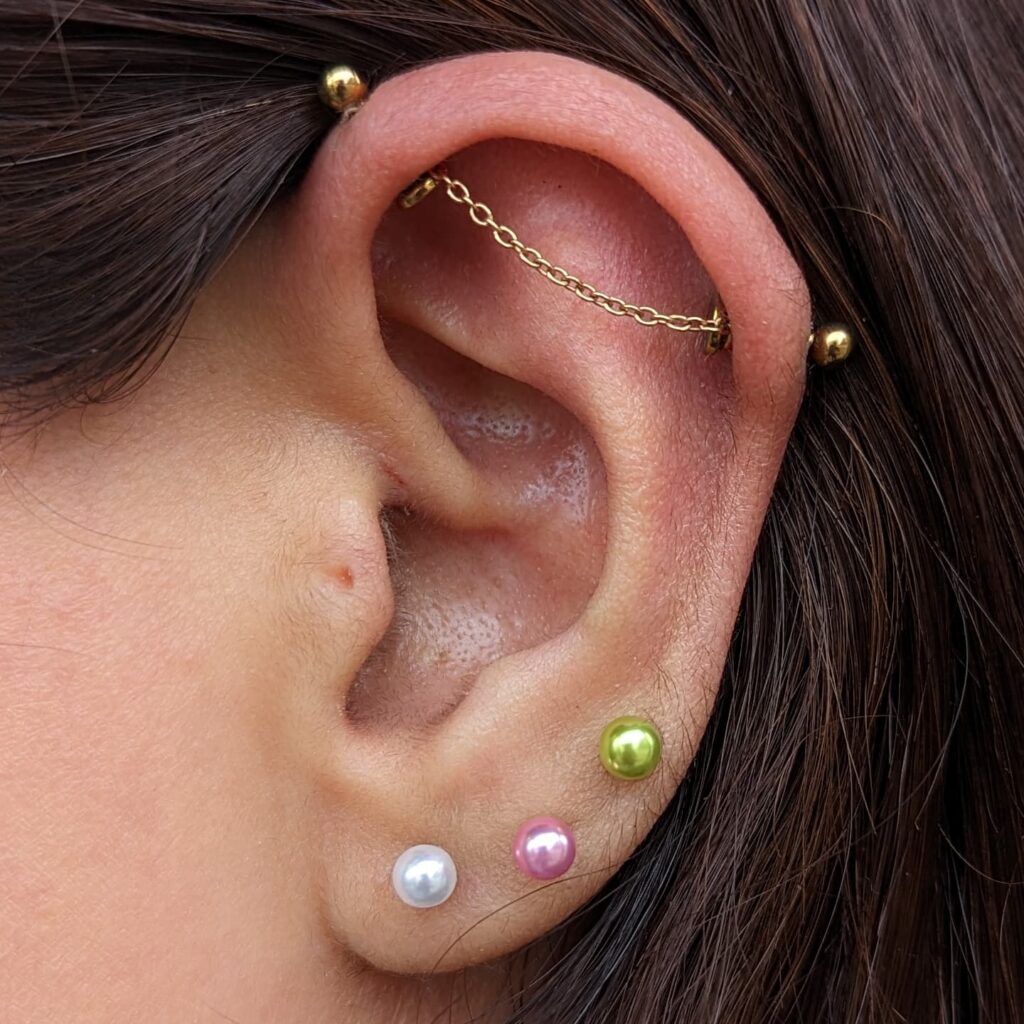
Industrial with a ball & socket (fresh)

Getting Creative! (This was a LONG time ago, can’t remember if it’s fresh or healed!)

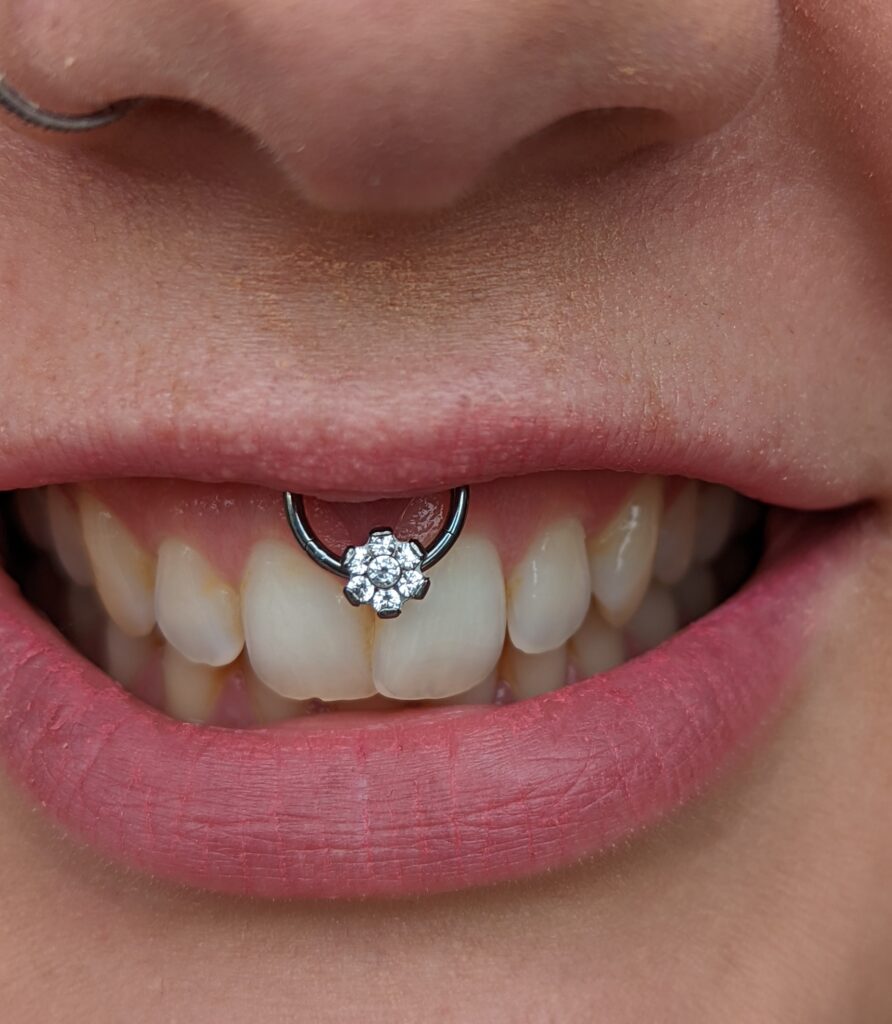
SMILEYS: there has to be a visible and good-sized ‘web’ attaching the upper lip to the gum. Unfortunately, this is one that doesn’t have any wiggle-room for variations.
Smiley piercing with appropriate anatomy (healed)
SNUGS: This is a hard one to heal, even with perfect anatomy. But the ridge between the conch and outer helix has to be prominent and ideally ‘tall’ and at a sharp angle away from the ear. There IS another option – which a lot of people go for even if their anatomy is suitable, due to the problematic healing of this one – a ‘faux snug’. A faux snug is 2 separate piercings – conch and helix – positioned to LOOK LIKE a snug. They often heal much more easily, and if you wanna tell people you have a snug piercing, not a faux snug, your secret is safe with me!
Snug piercing (healed)
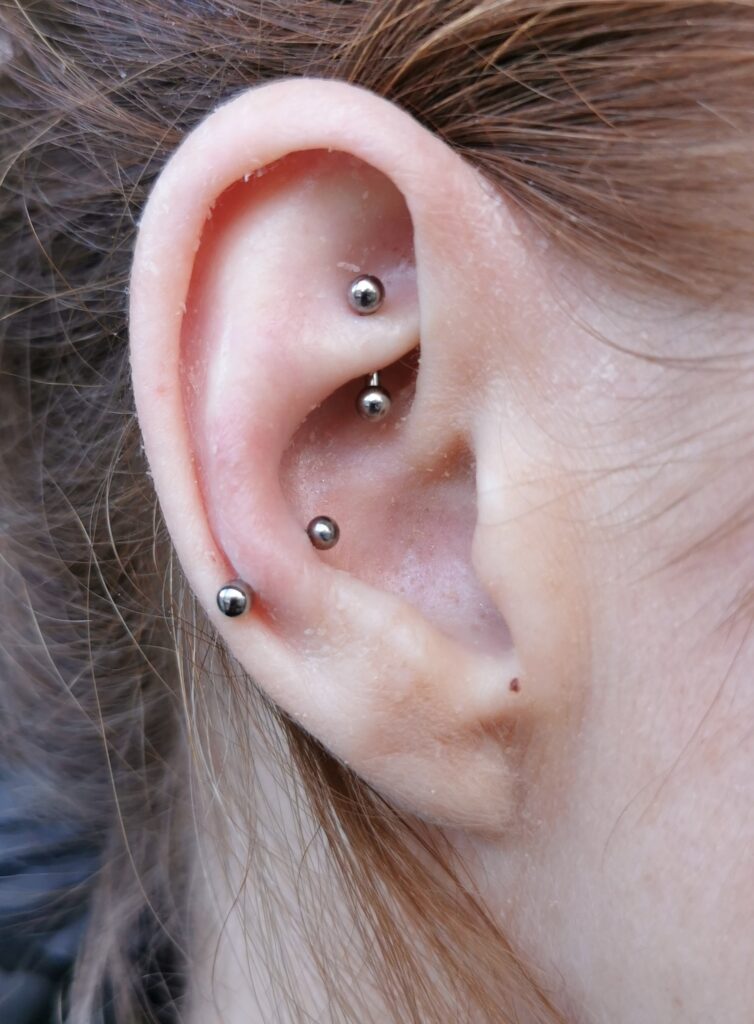
Faux snug (fresh)

INTIMATE PIERCINGS: No two people’s intimate area is the same, and anatomy there can be very different. Often not having the right anatomy for one piercing means you have perfect anatomy for another! For vulva piercing, if someone doesn’t have suitable anatomy for a ‘Christina’ piercing, it’s usual for them to have perfect anatomy for a VCH. Like smileys, there’s no real wiggle room for these, but other intimate piercings are often do-able.
No pictures of intimate piercings, but I’m always happy to have an anatomy check and consultation with anyone unsure which intimate piercings would be suited to their anatomy.
HOW CAN I TELL IF MY ANATOMY IS SUITED?
It’s often hard to anatomy check yourself, but there are certain things you can do – the infamous ‘cotton bud test’ for a VCH, for example. It’s always best to ask an experienced piercer for help with any anatomy dependent piercings, and ask to see examples of their work on different anatomies. I am always happy to have a consultation and anatomy check with a client, with no plans to pierce there and then – ONLY to discuss the possibilities. This is a free service and no obligation to get anything done at any stage. During an anatomy check, I ask the client what their goal is, and then kinda work backwards from there until we get to a point that the client is happy with the planned piercing, and I am happy that it’s safe (we’re getting to ‘safe’ being discussed, I promise!) and viable. I will always talk through the options with clients if their ‘1st choice’ isn’t possible, but with the understanding that they have come to me asking for ‘A’ and I am offering ‘B’ or ‘C’ instead. Sometimes people want to go away and think about the options, and sometimes they are happy to go for it there and then – both of these things are fine and my client is always in control of how we proceed.
IF MY ANATOMY ISN’T SUITABLE, WHAT CAN I DO?
As mentioned above, sometimes there are options. Sometimes the piercing is viable, but you may be limited on which jewellery styles you can wear. Sometimes I will forward clients to another piercer who maybe has more experience with this particular piercing – getting a ‘2nd opinion’ on it. But unfortunately, sometimes its just not the piercing for you.
BUT COULD YOU DO IT ANYWAY?
If by ‘do it’ you mean put a needle through and put jewellery in, usually, yes. But this is where we’re discussing the mentions of the word ‘safe’ from earlier. But if we ‘just do it anyway’, KNOWING that the anatomy is not suitable, the piercing is likely to not heal, not stay in there (‘grow out’) or potentially cause a lot of damage/scarring to the area, it is not a safe piercing, and it’s not a viable piercing. I’d rather turn down a request than do something that I am pretty sure will not work out. It’s not ethical, its not fair on clients, and it’s going to potentially cause a lot of problems (scarring, pain, damage to the surrounding area) further down the line. Just because you CAN, doesn’t mean you SHOULD.
The following photos show what can happen if unsuitable anatomy is ‘pierced anyway’. These were either taken by me (or other piercers who have had the client come to them for help) with the clients’ consent, or found on google. No studios will be named, these are not being shared to shame anyone, simply to illustrate what happens when clients’ anatomy is not considered.
Often, newer piercers are pushed to do a specific placement by a client, this is something that I think every piercer has done at some point in their career, so no shaming at all. But it also means that while we can look at the pictures below and be quick to blame the piercer – we have no context or back story as to what was requested, warnings given, etc.
**TO BE CLEAR, THE IMAGES BELOW ARE NOT MY WORK**
Industrial pierced without a prominent helix rim
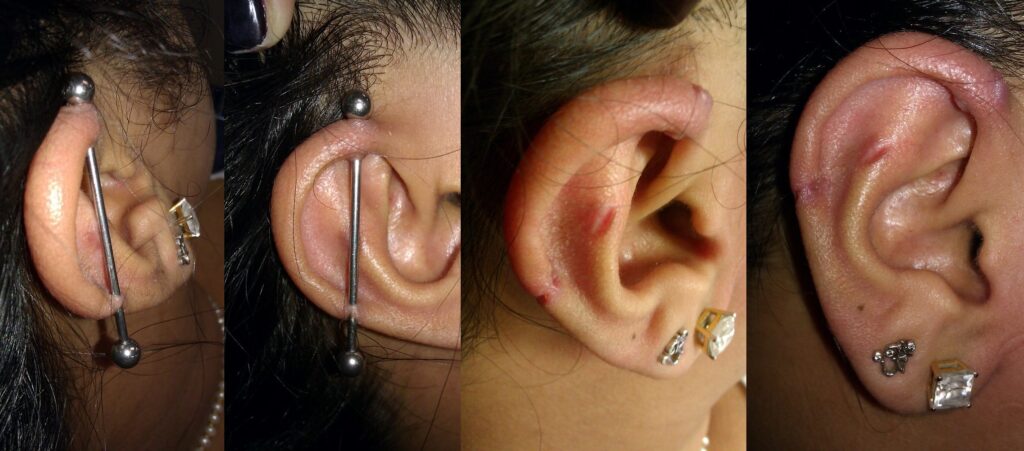

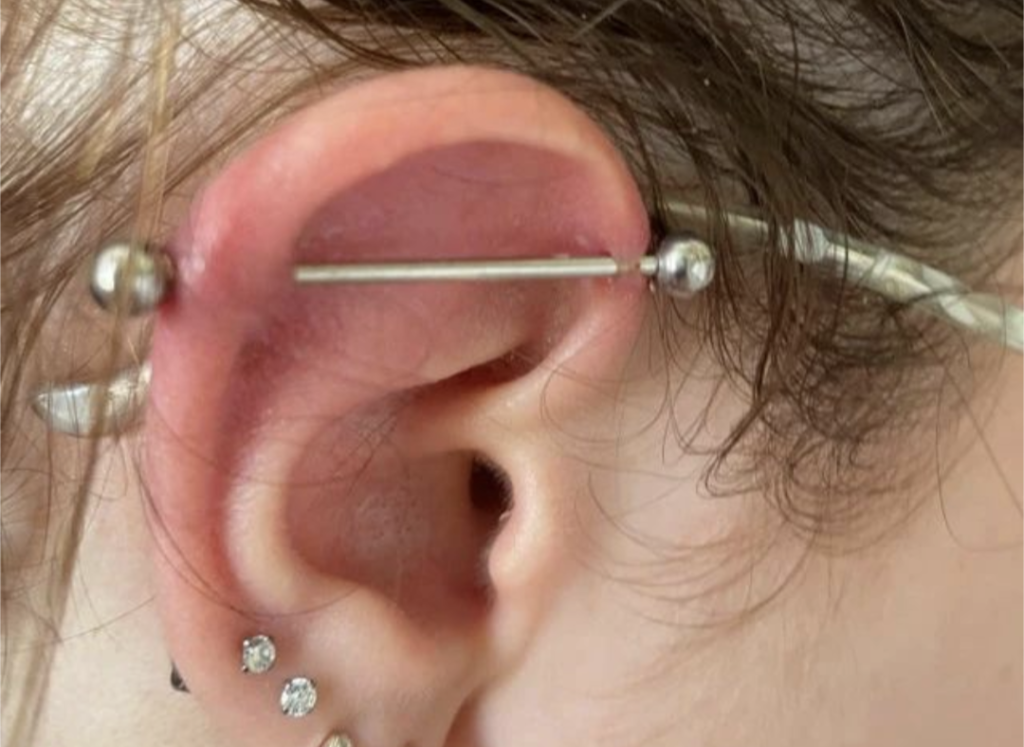
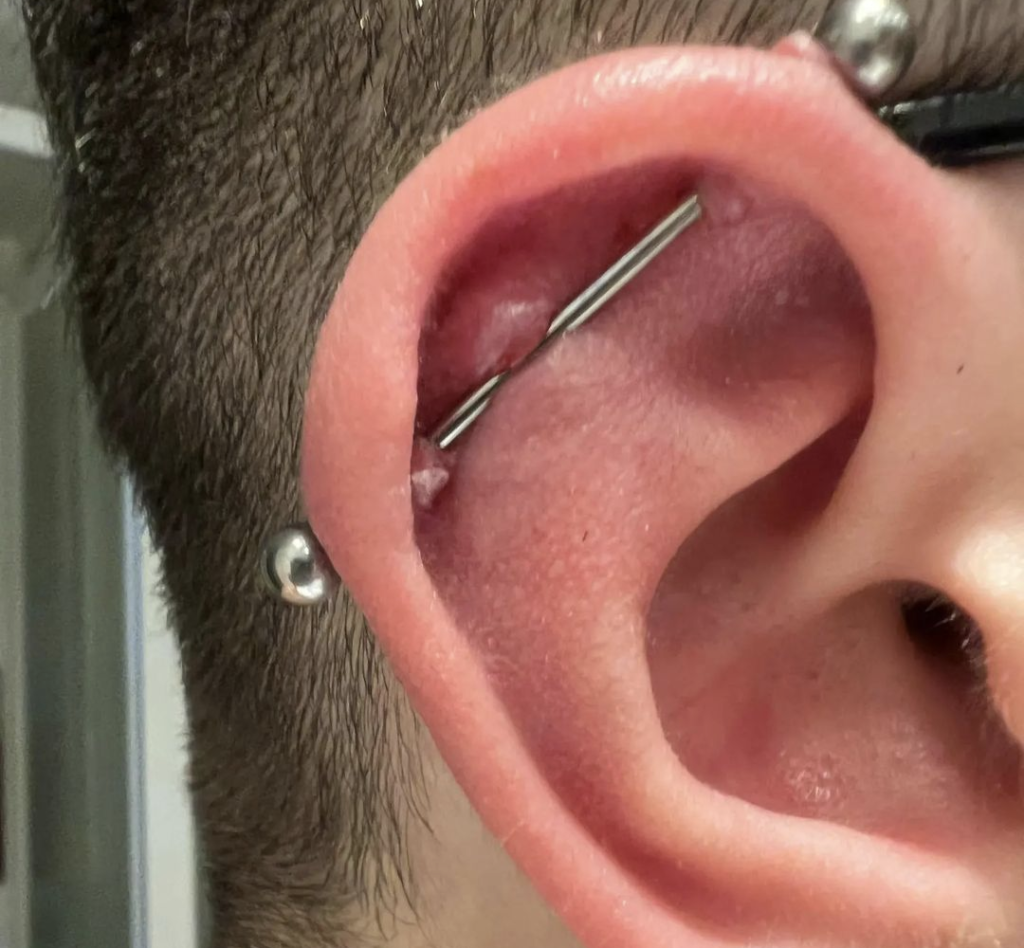
Industrial pierced without the upper ear being flat (or the piercing NOT being positioned in a way that could work)
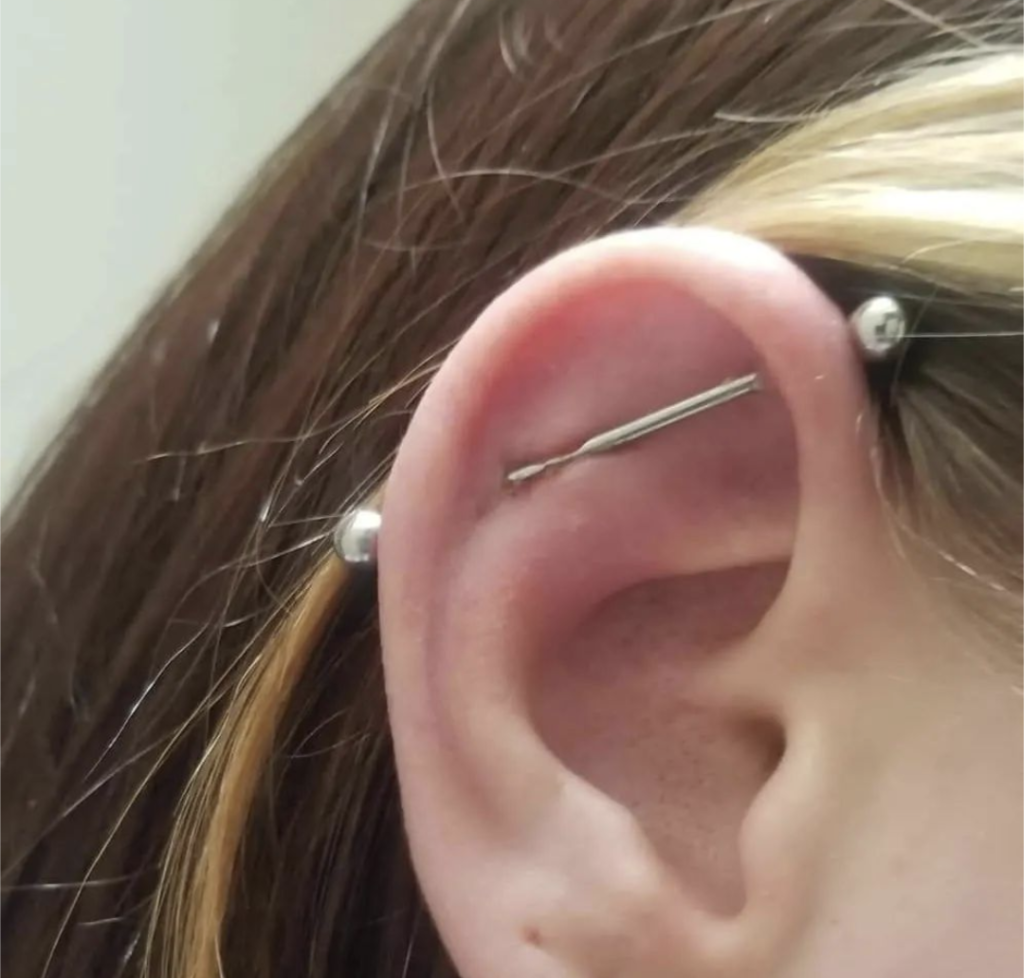
Looking at these ears, I would say they are absolutely appropriate anatomy for an industrial piercing, but the piercing has been placed too deep/in the wrong position or angle. So, while their anatomy is fine, the piercing has – for whatever reason – been placed incorrectly.

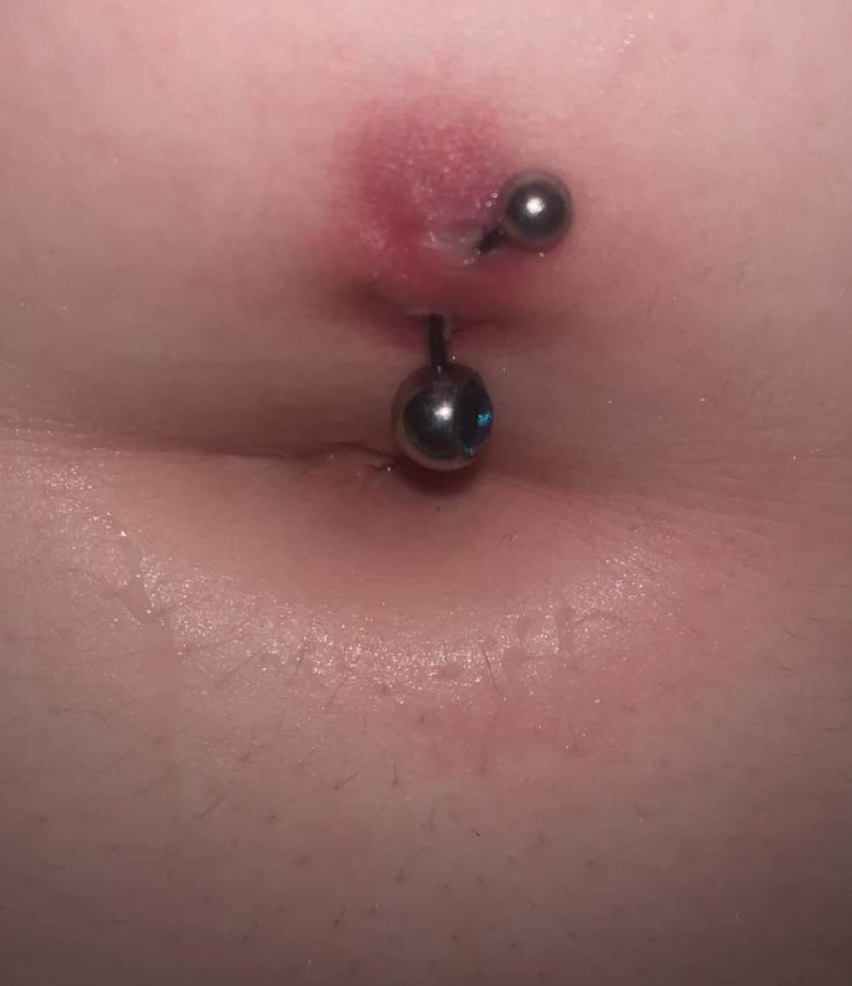
Navels – the pic quality on these isn’t great, but it illustrates what can happen if care isn’t taken to assess anatomy and pierce to work WITH the anatomy, not against it.
This navel is – in my opinion – unsuitable for a standard OR floating placement.
The upper piercing here looks fine (and healed) but the other 2 have been pierced where there is no ‘lip’ or rise, and will likely grow out, leaving scarring.

This one is not even in the navel – likely when the client sits down, their navel will fold inwards, but the piercing will still be visible. This navel might have been suited for a floating navel though.

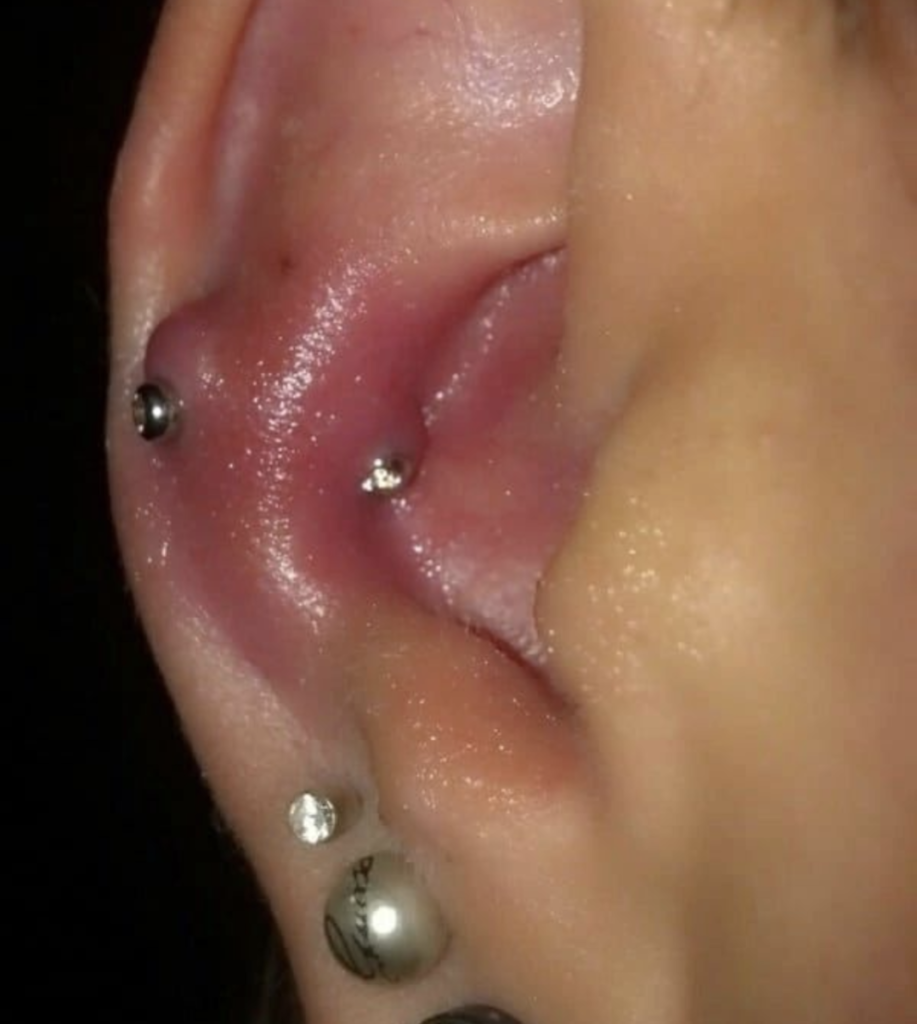
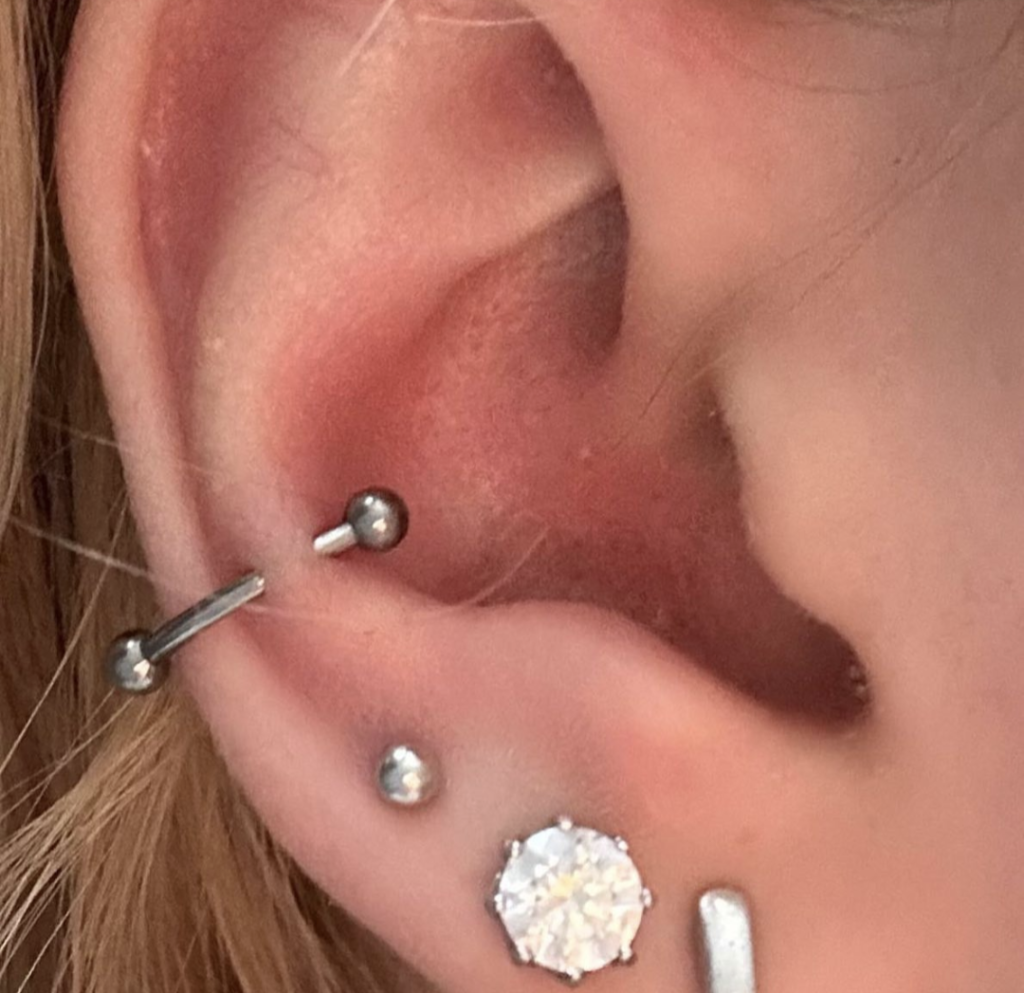
Snugs – difficult to heal even with perfect anatomy. The swollen one is hard to tell what the anatomy is like, as it’s super swollen, but I suspect that it wasn’t a high enough ‘rise’ and so has been pierced super deep. The one that appears healed is the opposite – the anatomy isn’t perfect, and I probably wouldn’t have done it, but it HAS healed (in a fashion!) however, the jewellery is way too large, and it looks like the piercing channel is no longer through the cartilage (so it was either pierced like this – waaaay too shallow, or the piercing has migrated out). In this instance, a ‘faux snug’ would be a great alternative.
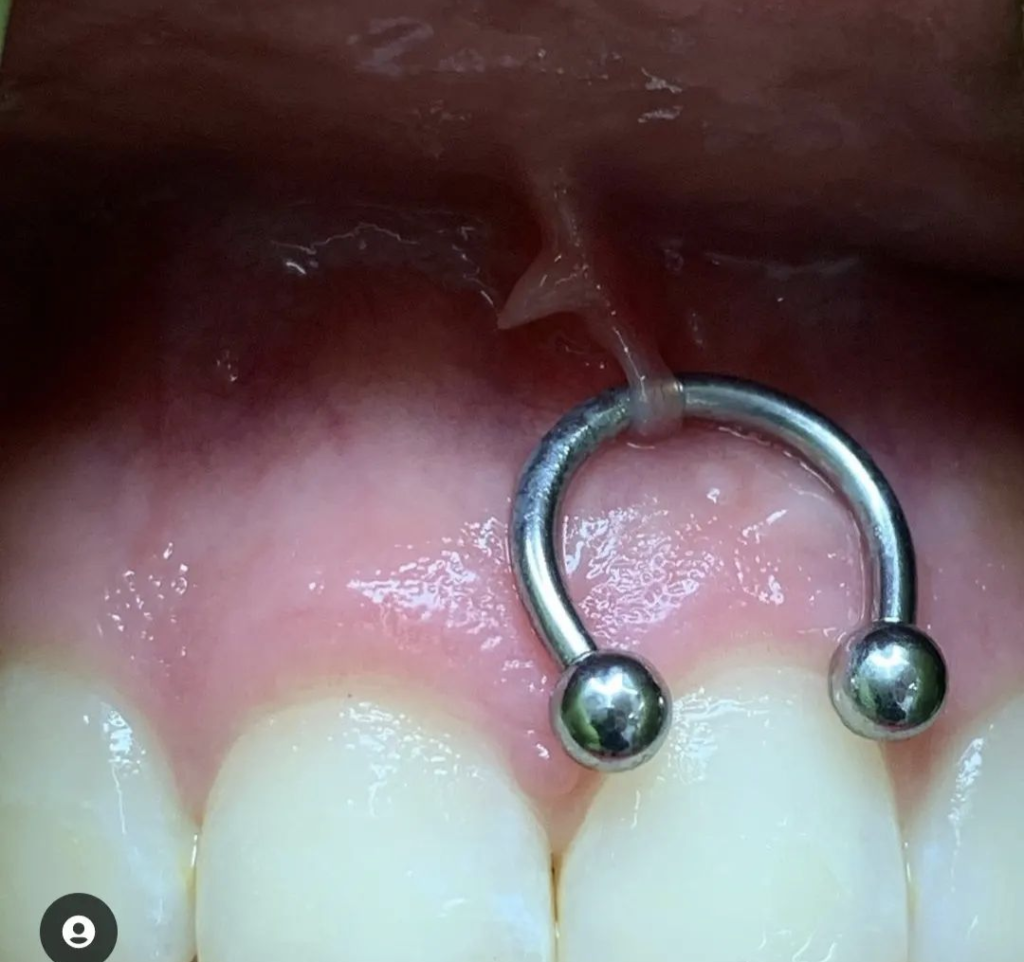
Smiley – so this little guy is hanging on for dear life! Arguably, as with the snug above, it IS a piercing that has held on against all odds, it doesn’t appear fresh. But one granola bar could take this out very easily!
Something we didn’t touch on is a ‘quantity limitation’ (is that a phrase? It is now!) and the number one piercing that has this is the hallowed ‘triple forward helix’. This beauty of a trio got SUPER famous in the early 2010s from an absolute queen in the piercing world – Chrissy Shull at Integrity Piercing
(this is the original photo – and credit for the pic and piercings is Chrissy Shull)
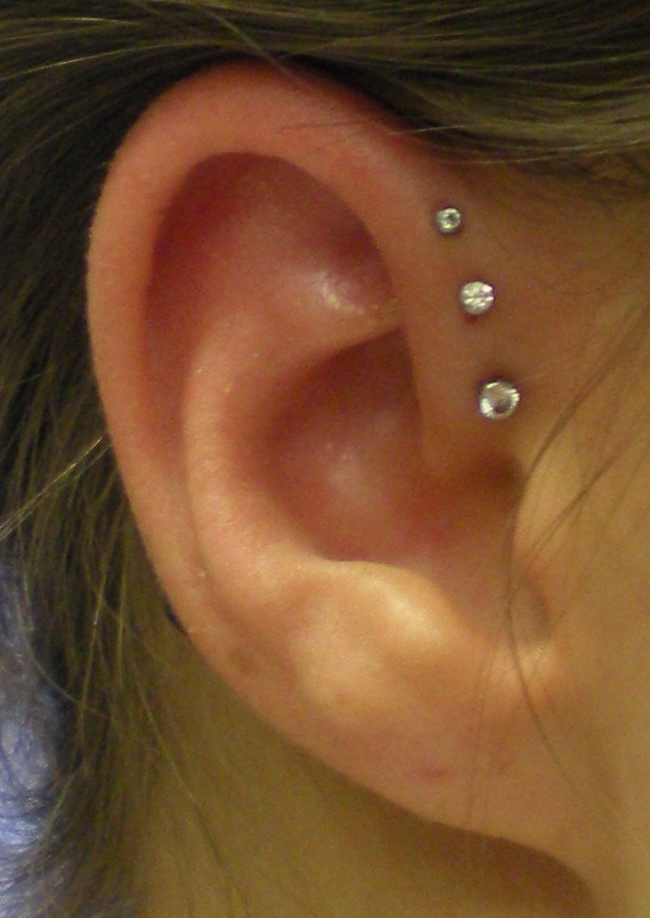
I’d say that easily 90% of people can get ONE forward helix piercing. Probably about 50% of people can get two. And around 10% have enough room for 3.
Using cluster jewellery (multiple stones attached together and worn through a single piercing) can give a similar look (obviously the stones are touching, not separate) but often these are attempted without enough space and this can often mean that the heavy scarring left could prevent any chance of a repierce.
This ear has enough space for 2 – one above and one below the rook – but that centre piercing (even if done at a better angle) would be pushed at an angle by the rook and would potentially heal at that angle, meaning the spacing would be off, and the jewellery would not be perpendicular to the tissue.
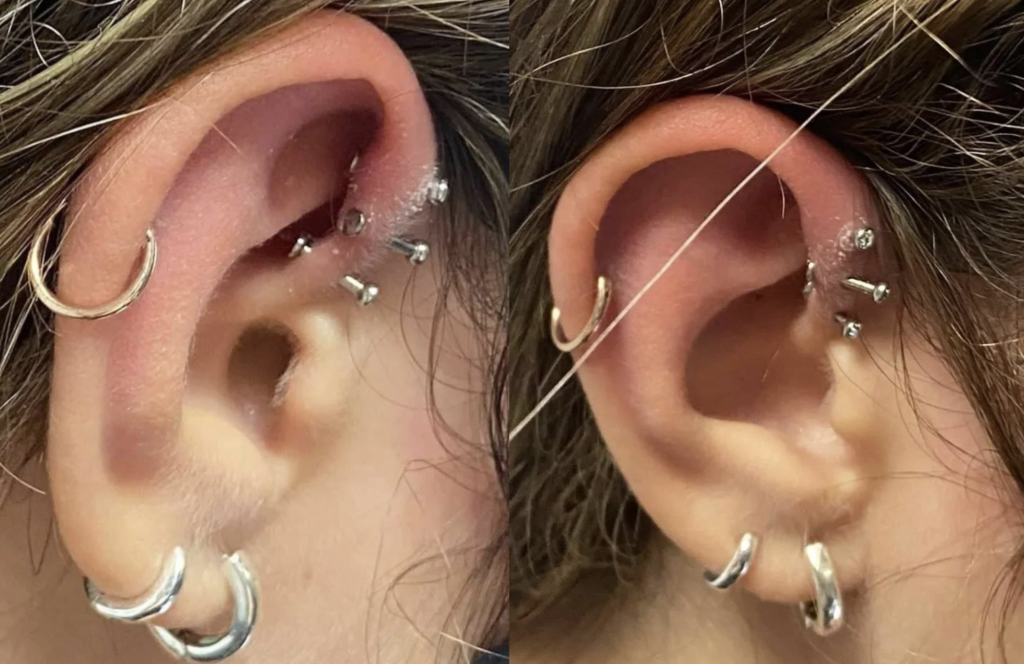
It’s hard to tell if this ear would be suitable for a forward helix, as the tissue folds in a concave way above the rook, so a lower piercing MIGHT be possible, but from what I can tell from this photo, I wouldn’t want to pierce level with or above the rook. The lower piercing shown isn’t at a great angle and is quite shallow – and this kind of placement would probably not look good with a ring in there, so jewellery options would be limited to a stud only.

I hope I’ve managed to be clear and concise with this one, and that it has answered a lot of questions that people have, please contact me if you have any queries <3